Pelvic floor exercises for women over 40 require a different starting point than most programs offer.
If every time you search you get Kegel lists or programs built for postpartum women in their 20s — this is written specifically for where you are right now.
If you want to skip ahead to a structured program that does this for you, you can see it here →
Foundational Pelvic Floor Exercises for Women Over 40
The most common advice for pelvic floor issues is to start doing Kegels. And while Kegel exercises have a legitimate role in pelvic floor rehabilitation, beginning with isolated contractions is not always the most effective first step — particularly for midlife women.
Here’s why starting point matters so much:
Your body has changed hormonally. Estrogen decline during perimenopause and menopause affects pelvic floor tissue tone, elasticity, and responsiveness. Approaches designed for younger women don’t account for this hormonal context.
Decades of habits are in play. How you breathe, hold tension in your body, and move through daily life has accumulated over decades. These patterns affect your pelvic floor function in ways that need to be addressed alongside any exercise program.
Not everyone needs more contraction. Some women have a pelvic floor that holds too much tension rather than too little. Starting with contraction-focused exercises in this case can worsen symptoms rather than improve them. Understanding your starting point matters before choosing your exercises.
Not sure if tension or weakness is your starting point? These 5 signs your pelvic floor needs more support can help clarify what your body is communicating.
Why Breathing Comes Before Every Pelvic Floor Exercise
Your diaphragm and pelvic floor move together with every single breath — thousands of times per day. When you inhale deeply your diaphragm descends and your pelvic floor gently relaxes. When you exhale your diaphragm lifts and your pelvic floor naturally rises and coordinates. This rhythm is the foundation of everything else.
When breathing becomes shallow — which happens with stress, poor posture, and decades of habitual breath-holding during exertion — your diaphragm stops moving through its full range. Your pelvic floor loses the rhythmic coordination signal it depends on. And no amount of contractions or exercises rebuilds that coordination until the breathing pattern is restored first.
The single highest-leverage change most women over 40 can make for pelvic floor function costs nothing and requires no equipment: learning to exhale at the moment of exertion. The lift, the step, the squat, the sneeze — exhaling on effort manages intra-abdominal pressure from above rather than relying solely on pelvic floor resistance from below.
For a deeper look at how breathing connects to pelvic floor tension and symptoms read breathing and your pelvic floor after 40 — the breathing mechanism is explained there in full detail.
Before You Start Any Pelvic Floor Exercise Program
Before jumping into exercises, it’s worth understanding a few foundational things about how your pelvic floor works:
Your pelvic floor is part of a system. It functions alongside your diaphragm, deep abdominal muscles, and the muscles along your spine. Exercises that address this system as a whole are more effective than those that isolate the pelvic floor alone.
Breathing is fundamental. How you breathe during movement directly affects the pressure in your core and how your pelvic floor responds. Learning to coordinate your breath with movement is one of the most important foundational skills — and it costs nothing.
Relaxation matters as much as strengthening. A pelvic floor that can fully relax is just as important as one that can contract. Many exercise programs focus only on strengthening and skip the relaxation component entirely.
Consistency beats intensity. Small consistent efforts over time produce more lasting change than occasional intense sessions. A realistic approach you can maintain is far more valuable than a perfect program you do twice and abandon.
The Core Pelvic Floor Exercises to Start With
These are general movement principles that are widely recommended in pelvic floor physical therapy as foundational starting points. They are not a substitute for personalized guidance from a pelvic floor physical therapist.
Diaphragmatic Breathing This is the single most important foundational skill — and most women skip it entirely. When your breathing pattern is off, every exercise you do on top of it is working against a broken foundation. Getting this right first changes everything else.
Pelvic Floor Awareness — Relax First Most programs jump straight to contraction. But if your pelvic floor is already holding too much tension — which is more common than most women realize — strengthening makes things worse, not better. Knowing which situation applies to you is the critical first step.
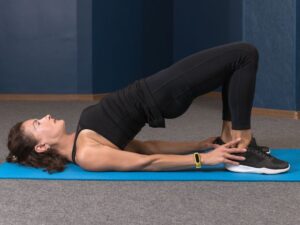
Bridge Pose With Breath Coordination A bridge isn’t just a glute exercise. When done correctly with breath coordination, it trains the pelvic floor, deep abdominals, and glutes to work as a system — the way they’re actually supposed to function together. Most women do this wrong without realizing it.
Heel Slides One of the most underrated foundational movements for pelvic floor coordination. Low pressure, high value — particularly for women returning to exercise or starting from scratch.
Standing Hip Hinge The movement pattern your body uses constantly in daily life. When this isn’t working properly, your pelvic floor compensates — and compensation patterns are often where symptoms start.
What to Avoid When Starting Out
Avoid high-impact exercise before building a foundation. Running, jumping, and high-intensity interval training place significant demand on the pelvic floor. If you are experiencing symptoms, building foundational coordination first before returning to high-impact activity is worth the investment of time.
Avoid holding your breath during exercise. Breath-holding significantly increases intra-abdominal pressure and places more demand on the pelvic floor. Learning to exhale during exertion is one of the most protective habits you can develop.
Avoid doing too much too soon. The pelvic floor responds to consistent, progressive training — not to volume or intensity. More is not better when it comes to pelvic floor work, particularly at the beginning.
When to Progress
Once diaphragmatic breathing feels natural, you can hold a conversation during bridge exercises without losing coordination, and foundational movements feel stable and symptom-free — that is when it makes sense to progress to more challenging exercises. Progressing before this foundation is solid is one of the most common reasons women don’t see the results they’re hoping for.
A Structured Approach Worth Considering
If you’d rather follow a structured program that takes you through pelvic floor exercises for women over 40 in a clear, progressive sequence — rather than piecing together individual exercises yourself — Pelvic Floor Strong is one I’ve come across that takes this kind of whole-body, step-by-step approach.
When to See a Professional
If you are experiencing extreme symptoms — leaking, pelvic pressure, pain, or prolapse sensations — it is best to consult your physician. Additionally, consulting a pelvic floor physical therapist before beginning a self-guided exercise program is strongly recommended. A pelvic floor PT can assess whether tension or weakness is the primary issue, which significantly affects which exercises are appropriate for your specific situation.
Sources: Mayo Clinic — Kegel Exercises · NIH — Bladder Control Problems in Women · Cleveland Clinic — Pelvic Floor Dysfunction · ACOG — Pelvic Support Problems

 Waking Up at Night to Pee After 40 — Why It Happens