
Part 1 of the “Art of Living Light” Minimalism Series
We’ve all been there. You sit down to breathe, to meditate, or even just to enjoy a cup of tea, but your eyes keep darting around the room. There’s a stack of mail on the counter, a pile of shoes by the door, and three different “projects” half-finished on the coffee table.
It’s hard to have a quiet mind when your surroundings are shouting at you.
For a long time, I thought minimalism was just a design aesthetic—all white walls and empty shelves. But I’ve learned that a true minimalist home transformation is actually a form of self-advocacy. It’s the act of deciding that your peace of mind is more important than the “stuff” you’re holding onto “just in case.”
When we clear our physical space, we aren’t just cleaning; we are making an intentional choice to stop the sensory overload. We are giving our souls room to breathe.
The Connection Between Clutter and Stress
There is a reason why you feel a literal “weight” lifted when you clear off a countertop. Our brains are wired to scan our environment for information. When a room is filled with unfinished tasks—laundry to be folded, dishes to be washed, or papers to be filed—your brain sees each item as a “to-do” list that never ends.
This constant visual stimulation keeps our bodies in a low-level state of “fight or flight.” It’s hard to settle into deep, soulful work or true relaxation when your environment is constantly reminding you of what you haven’t done yet. This is why a minimalist home transformation starts with the psychology of our spaces.
Minimalism as a Path to Mindfulness
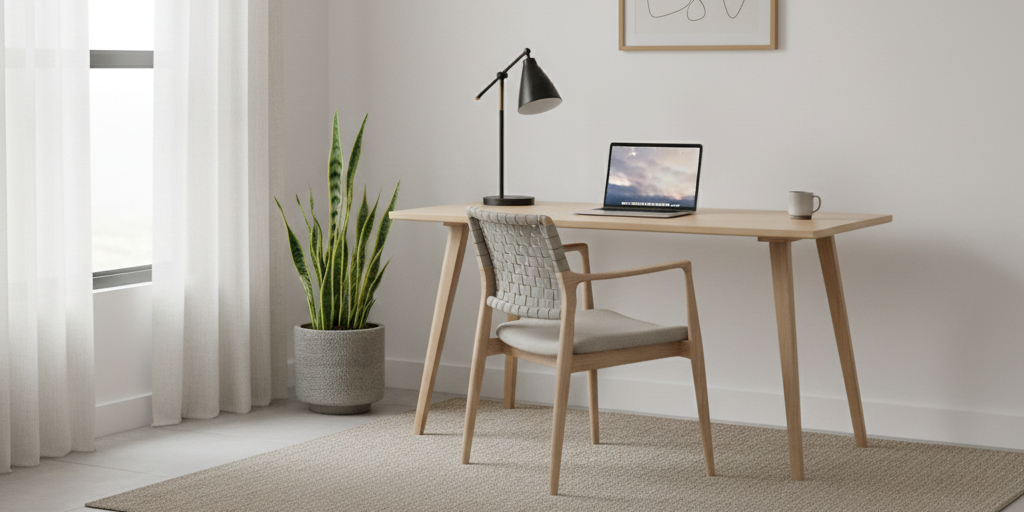
Minimalism isn’t about deprivation. It’s about addition through subtraction. By removing the items that no longer serve a purpose or bring you joy, you are creating space for:
◽ Clarity: Less time searching for keys means more time for your morning ritual.
◽ Calm: A clear surface allows your eyes to rest rather than bounce from object to object.
◽ Presence: You can focus on the person in front of you—or the book in your hand—without the background noise of ‘mess’.
Your Small Win for Today
You don’t have to tackle the whole house this weekend. In fact, I recommend you don’t. True, lasting change happens in small, soulful shifts.
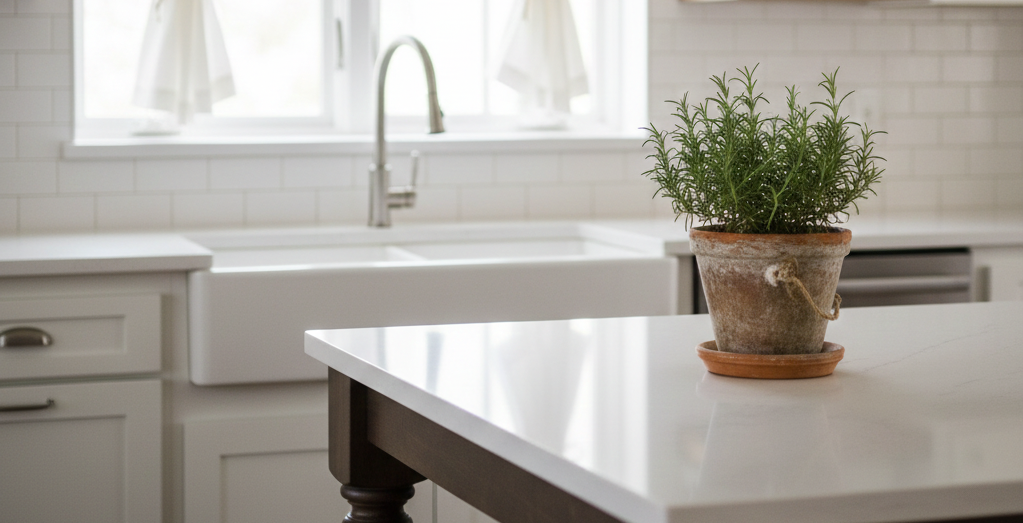
Today’s Challenge: Pick just one “flat surface” in your home. Maybe it’s your nightstand, your desk, or the kitchen island. Clear it completely. Clean the surface until it shines, and only put back what is absolutely essential or beautiful. Beginning your minimalist home transformation with just one surface makes the process feel achievable rather than overwhelming.
What to do with the “Leftover” Stuff
When you clear that one surface, don’t let the clutter just migrate to the next room. That only moves the stress around. Instead, use the Three-Box Method:
◽ Keep & Rehome: Move items that belong in a different room to their “forever home” immediately.
◽ Donate/Discard: If you haven’t used it in six months, it’s taking up “soul space.” Let it go.
◽ The “Maybe” Box: If you’re truly unsure, put the items in a box and hide it. If you don’t go looking for them in 30 days, you don’t need them.
Protecting Your Sanctuary
The hardest part of minimalism isn’t clearing a space; it’s keeping it clear. Surfaces are “clutter magnets.” Once one piece of mail lands there, three more will follow by dinner time.
Commit to a “Zero-Surface Policy” for your one chosen spot. Every night before you go to bed, ensure that specific surface is clear. This one small act of self-discipline sends a powerful message to your brain: This space is for peace, not for chores. Notice how you feel every time you walk past that one clear space. That feeling? That is the start of your sanctuary.
Coming Next in the Series…
Now that we understand the “why,” it’s time to get our hands into the work. In Part 2: The Sanctuary Shift, we’ll move from the mindset of minimalism to the physical practice. I’ll show you how to identify your home’s “stress centers” and how to transform one small corner into a dedicated space for peace.
Are you ready to stop managing clutter and start creating a sanctuary? I’ll see you in Part 2.

 My Go-To Nutritious Post-Workout Smoothie for Burnout Recovery