

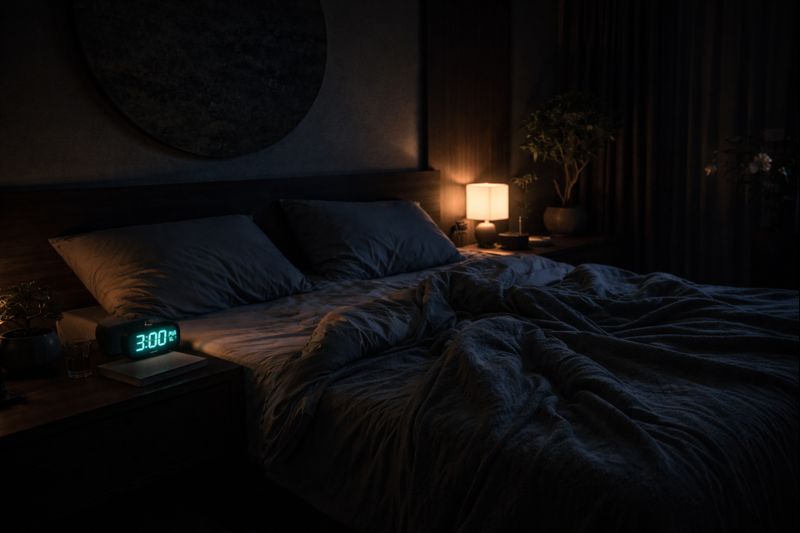
If you’ve ever found yourself wide awake at 3 AM, staring into the dark and silently negotiating with sleep to come back, you’re not alone. I do it. Most of my friends do it. We text each other the next morning: “3 AM club again?” It’s become such a running joke that we might as well have membership cards.
Falling asleep is usually easy. Staying asleep? That’s the part that feels like a mystery.
The truth is, that middle-of-the-night wake-up is often your body sending a gentle (or not-so-gentle) signal. It’s not random, and it’s not because you’re broken. Here are the two patterns I’ve noticed most—in my own life and in conversations with friends—and some simple ways we’ve found to invite deeper, more uninterrupted rest.
The Two Most Common 3 AM Culprits We All Share
If you’ve talked about this with your friends, you know the frustration. It turns out, there are usually two big reasons our bodies hit the “eject” button on sleep right in the middle of the night.
Reason 1: Evening Energy Swings
A heavier dinner, a glass of wine, or that “just one” sweet treat can create a quiet rollercoaster. Hours later—often right around 3 AM—the body adjusts, and the brain interprets the shift as “pay attention.” Suddenly you’re awake, heart racing a little, wondering why you feel wired when you’re actually exhausted.
Reason 2: The Relaxation Mineral Drain
Even when we eat well and move through busy days, we burn through calming minerals like magnesium and potassium quickly. When those levels dip, the nervous system can stay subtly on alert. You drift off fine, but the moment you cycle into lighter sleep (often around 3 AM), your brain decides it’s time to check in.
Since so many of us deal with this mineral drain and energy swings, I’ve started recommending a simple supplement that targets exactly these issues: Yu Sleep. It’s plant-based, helps rebuild that calm (with magnesium and other natural supporters), and has really helped me and friends cut down on those wake-ups.
Of course, start with the free rituals below—they’re powerful on their own—but if you need more support…
Simple, Free Rituals That Have Helped Me (and My Friends)
Before anything else, try these no-cost habits that calm the system beautifully:
Box Breathing — Inhale 4, hold 4, exhale 4, hold 4. I do this in bed when my mind starts spinning. It’s like hitting a reset button.
Why it helps: It works so quickly because slowing your exhale like this flips your nervous system from ‘alert’ to ‘rest and digest’ mode—almost like pressing a biological brake pedal.
Evening Brain Dump — Five minutes of journaling worries or tomorrow’s to-do list onto paper. It sounds small, but it clears mental clutter fast.
An Evening Routine Worth Protecting
The 60-Minute Digital Sunset — Phones down an hour before bed. Blue light tricks your brain into thinking it’s daytime.
Why it helps: Blue light from screens suppresses melatonin (your natural sleep hormone) more than regular light, so giving your brain that hour of dimness helps melatonin rise naturally.
The 3-2-1 Rule — No food 3 hours before bed, no work 2 hours before, no screens 1 hour before.
Cool & Dark Sanctuary — Keep the bedroom around 68°F with blackout blinds or curtains.
Why it helps: A calm, cave-like space makes a bigger difference than most people expect. Your body needs to cool down about 1-2 degrees to stay in deep sleep—that’s why a slightly chilly room feels so inviting once you’re under the covers.

My Favorite Sunday Reset (External + Internal)
The Epsom Salt Soak (External Recovery) Before bed, try to squeeze in a warm bath with two cups of Epsom Salts.
Why it helps: The warm water helps drop your core body temperature (a key signal for deep sleep), while the magnesium absorbed through the skin helps supports muscle relaxation and helps calm overactive nerves.
Intentional Breath Awareness Shallow or mouth breathing at night can keep the body in low-grade alert mode. Simply noticing and softening the breath helps tremendously.
If You Do Wake Up at 3 AM…
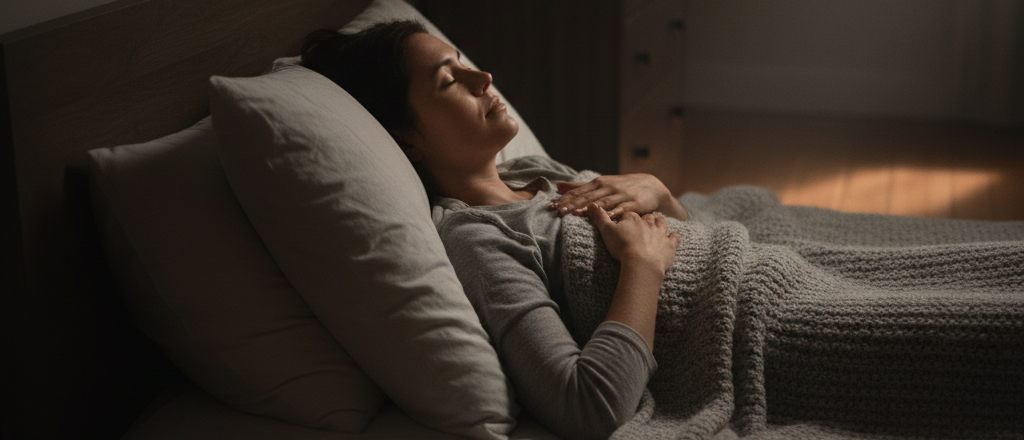
Stay in the dark: No phone—the light and “how many hours left?” math will only make it worse.
Try the 4-7-8 Breath: Inhale for 4, hold for 7, exhale for 8. It’s a fast way to tell your body everything is safe.
Small, consistent rituals add up. Start with one tonight—maybe the box breathing or the digital sunset—and see how it feels. Sweet dreams (the uninterrupted kind)!
If you’re still struggling, you may want to give Yu Sleep a try.
If you’re like me and love to know the “why” behind the ritual, here are a few resources I found incredibly helpful while researching my own sleep:
On Minerals: How Magnesium Works for Sleep – The Sleep Foundation
On Blue Light: Why Your Phone is a Sleep Thief – Harvard Health
On Breathing: A Guide to the 4-7-8 Breathing Method – The Cleveland Clinic
Disclaimer: I am not a doctor. This content is for inspirational purposes and reflects my personal experience. Please consult a healthcare professional before starting new supplements or physical routines.
I love sharing what works for me. As an Amazon Associate, I earn from qualifying purchases. This helps run the blog at no extra cost to you!

 The Art of the Active Reset: 5 Recovery Essentials I Swear By