Reader-supported. May contain affiliate links.
We talk a lot about the hustle—the workouts, the productivity, the endless to-do lists. But the “soul” work happens in the quiet moments. Whether you just finished a pilates session, a heavy lower-body week, or you’ve been sitting at your desk for eight hours, recovery is a non-negotiable.
True recovery isn’t just “doing nothing.” It’s an active choice to nourish your muscles and nervous system. Here is the short-list of what I’m currently using to reset my body and mind.
1. Magnesium Soak (The “Deep Sleep” Secret)
There is a reason an Epsom salt bath feels so much more restorative than a regular one. Epsom salts are made of magnesium sulfate, a naturally occurring mineral compound. When dissolved in warm water, it releases magnesium and sulfate ions, which many wellness experts suggest helps “quiet” the nervous system and ease the physical tension that builds up after a workout.
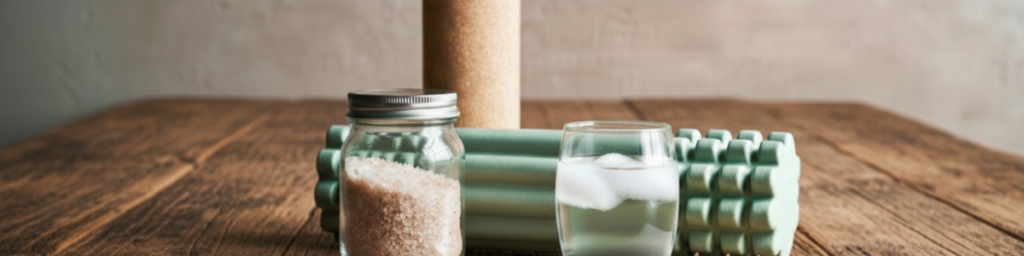
The Routine: To get the full benefit, I dissolve 1 to 2 cups of SaltWorks Ultra Epsom Bath Salts into a warm bath and soak for at least 15 to 20 minutes. According to the Epsom Salt Council, this is the standard timing to truly experience the muscle-relaxing benefits. It’s also a great way to help with temporary water retention, leaving you feeling a bit more “sculpted” and refreshed the next morning. I use this time to practice deep breathing or listen to a calm playlist—it’s my favorite way to disconnect from my phone and reconnect with myself.
2. Targeted Myofascial Release: Easing the Tension
If you are active, you’ve likely felt “knots” or tight spots in your muscles. This tension often lives in the fascia—the connective tissue that wraps around your muscles. To address this, I swear by the TriggerPoint GRID Foam Roller. Unlike standard smooth rollers, its patented surface has three distinct zones: flat areas that feel like a palm, tubular ridges that feel like fingers, and firm nodules that act like fingertips.
Research suggests that “self-myofascial release” increases blood flow and helps “unstick” the fascia. This allows your muscle fibers to move from a contracted state to an elongated one, improving your range of motion. The TriggerPoint design specifically helps aerate the tissue as you roll, pushing fresh oxygen and nutrients into the muscle to speed up repair.
The Routine: To get the best experience, most trainers suggest rolling slowly over a muscle group until you find a “tender” spot, then pausing for about 20 seconds to let the pressure do its work. It’s not about rolling as fast as you can; it’s about mindful pressure that helps your body feel more fluid and less restricted.
3. Supportive Footwear: The “Cloud” Effect
Recovery doesn’t stop the moment you leave the gym. I used to walk around my house barefoot on hard tile and wood floors, but I realized my lower back and arches were feeling fatigued by the end of the day. Most podiatrists recommend wearing a supportive, cushioned indoor shoe to keep your body in alignment and absorb the impact of every step.
The “Original” Cloud Aesthetic: If you want that viral, ultra-thick look that feels like a marshmallow, I like the Cloud Slides – Original Cushion Comfort. These are the ones that started the trend—they have a 1.75-inch thick sole and a plush foot bed. They are perfect for lounging at home or running a quick errand.
4. Ritualistic Hydration & Electrolytes
We’ve all been told to “drink more water,” but if you’re feeling sluggish even after a gallon of plain H2O, your cells might be struggling to actually absorb it. When we move—or even when we’re just stressed—we lose essential minerals like sodium, potassium, and magnesium.
The Science of Brain Fog: Your brain is nearly 75% water and relies on electrical impulses to think, focus, and remember. Electrolytes act as the “conductors” for these signals. When your mineral levels are low, those signals slow down, leading to that “cloudy” mental feeling. Research shows that even mild dehydration (as little as 2%) can significantly tank your concentration and mood.
The Routine: For a clean, plant-based daily ritual, I use CURE Electrolyte Drink Mix. It uses organic coconut water and pink Himalayan salt with no added sugar. On high-performance days when I’ve had a heavy sweat session, I might reach for LMNT Zero Sugar Electrolytes for a higher sodium boost. Both help wake up the nervous system and keep my energy levels stable.
5. Gentle, Mindful Movement
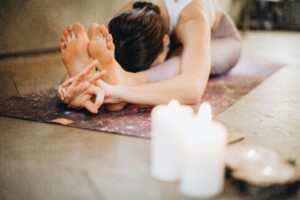
On rest days, total stillness can actually lead to more stiffness. I prefer “Active Recovery”—gentle movement that keeps the blood flowing to your muscles to help flush out metabolic waste. I usually follow the mobility stretches found in my favorite glute program. It isn’t about breaking a sweat or hitting a PR; it’s about staying flexible, honoring your body’s limits, and feeling fluid in your own skin.
Final Thought: Recovery isn’t a reward for a hard workout; it’s the foundation for your overall well-being. Take ten minutes tonight to do something kind for your body. Your soul will thank you.
Disclaimer: This content is for informational purposes and reflects my personal experience. I am not a medical professional. Please consult your doctor before starting new supplements or physical routines. Use all products only as directed by the manufacturer.

 Mindful Way To Build Strength: My Journey